The Ticket Stub as a Keepsake
The ticket stub as a keepsake holds the small details of a matchday, from admission to the printed evidence that a particular occasion took place.
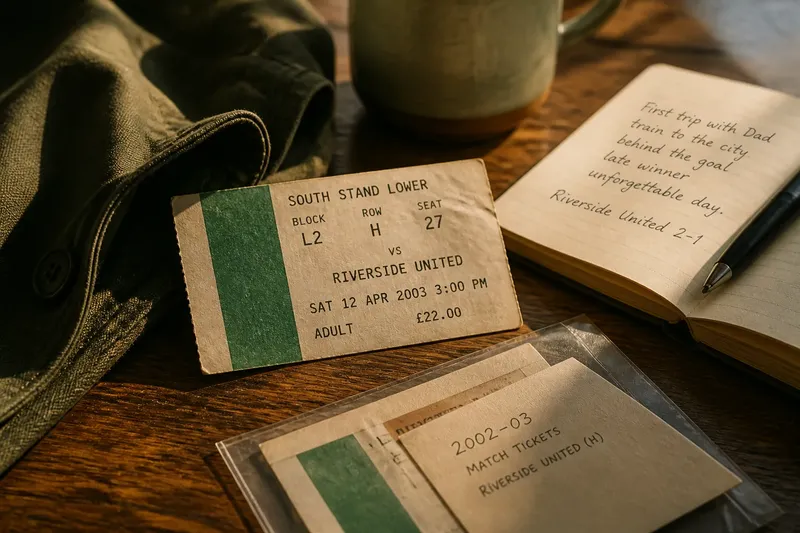
A ticket slips from a coat pocket onto the kitchen counter, its edge softened and its print still showing the gate and seat. As a ticket stub keepsake, it holds two kinds of meaning at once: it was used to enter a match, and it can later help someone recall the day beyond the turnstile. That shift from practical token to personal record is what makes the small rectangle worth keeping.
The match ticket has changed alongside the ways grounds manage entry, but its role as a record remains easy to recognize. These five features explain what a ticket preserves, why some tickets become mementos, and how to keep one without asking it to remember the whole match by itself.
1. Entry made tangible
Before electronic readers became common, a printed ticket was a visible claim to admission. A gate attendant could inspect its wording, tear or clip part of it, and allow the holder through. The paper did not simply describe the event; it had a job to do at the entrance.
That physical exchange gave a ticket a clear beginning. One portion might be retained by staff while the larger part stayed with the spectator, marked by a tear, crease, or punch. The change to a keepsake starts there: an object made to be handled and checked has passed through the occasion it authorizes.
Printed tickets also made the event legible before it began. A date, fixture, venue, section, and seat could be read at a glance. Even when those details were primarily functional, they became useful clues later, especially when memory blurred the order of a busy day.
2. Information becomes evidence
A match ticket is a compact document. Its details can identify a particular fixture more precisely than a broad recollection such as “the cup game” or “the afternoon we went together.” Team names, competition labels, admission areas, and printed dates give memory something concrete to return to.
Not every ticket contains the same information. Some show a named opponent and a seat assignment; others carry only a code, a general admission area, or the name of the venue. This variation affects what the paper can tell its future owner, but even a sparse ticket may preserve the fact of attendance and the kind of access it provided.
Say you find a ticket tucked inside a book, with the fixture and date visible but no note about who went with you. If you write a short caption on a separate slip of archival paper, naming the companion and the reason the day mattered, you add context without writing on the ticket; later, the printed details can anchor the note to the occasion.
3. The stub outlasts admission
Once the match is over, the ticket no longer opens the gate. Its practical purpose has ended, but its association with the event can grow stronger as the spectator connects it to a score, a journey, a conversation, or the company of someone who is no longer there. The object becomes a small prompt rather than a pass.
This change is personal, not automatic. One person may keep the ticket from a first match, while another saves one from an ordinary fixture because it was the last outing with a friend. The paper cannot show the entire emotional weight of either day; it gives the owner a physical starting point for recalling it.
That distinction helps explain why a ticket need not be rare or visually striking to matter. A routine design may carry a private association that a more elaborate collector’s item does not. Its value as a keepsake comes from the connection between object and memory, not from appearance alone.
4. Digital entry changes the object
Mobile tickets and scannable codes make admission less dependent on a separate piece of paper. A spectator may enter with a phone, while the ticket remains an image or account record rather than an object that can be folded into a wallet. The transaction still happens, but its physical trace is less immediate.
That shift changes what someone can save. A screenshot or confirmation email may retain the fixture details, but it does not carry the same wear, tear, or handling as a used paper ticket. Some spectators print a digital ticket or keep a card from the visit; others preserve the image alongside a photograph or brief note. Each choice keeps a different part of the occasion.
Saving a digital record also raises a simple practical question: will it remain accessible? A file may be stored with match photographs or exported as a document, while a paper ticket can be placed in a labeled envelope. The useful method is the one that leaves the identifying details readable and connected to the memory they are meant to prompt.
5. Keeping tickets readable
Paper tickets can fade, crease, or pick up marks from damp pockets and adhesive. Thermal printing, which develops text through heat-sensitive paper rather than conventional ink, can be especially vulnerable to heat and friction. A ticket that looks clear today may become harder to read if left in sunlight, taped into a scrapbook, or stored loose with keys and coins.
A modest storage routine can protect both the paper and its context:
- Let a damp ticket dry flat before storing it.
- Keep it away from direct sunlight and warm surfaces.
- Place it in an acid-free sleeve or a paper envelope rather than laminating it.
- Write the fixture and companion details on a separate note, not on the ticket.
- Store related tickets together in a labeled folder so their order remains clear.
It is not worth trying to make every stub look pristine. A small fold or a softened corner may be part of its history, and aggressive cleaning or flattening can cause more harm than leaving it alone. If the print is already faint, a clear photograph stored with the original can preserve a readable reference without altering the ticket.
Questions about ticket stubs?
Should you keep every match ticket?
No. Keep the tickets that connect to a distinct memory, person, or part of your own sporting life, and let routine duplicates go if they add no useful context. A short note can make one modest ticket more meaningful than a box of unexplained stubs.
Can a digital ticket be a keepsake?
Yes, though it preserves information differently from paper. Save a legible copy with the fixture details and, if useful, add a note about the occasion so the file does not become an unidentified image among other downloads.
What should you write beside a stub?
Record details the printed ticket cannot supply: who attended, how you got there, or what made the match memorable. Keep the note brief and factual enough to help your future self place the event.
A small record of attendance
The ticket stub as a keepsake works best as a prompt, not a complete account. Its printed details locate an occasion, while a separate note or remembered story gives those details human meaning. Kept together with care, the ticket can still tell you where you entered, what you came to see, and which part of the day you chose to carry home.