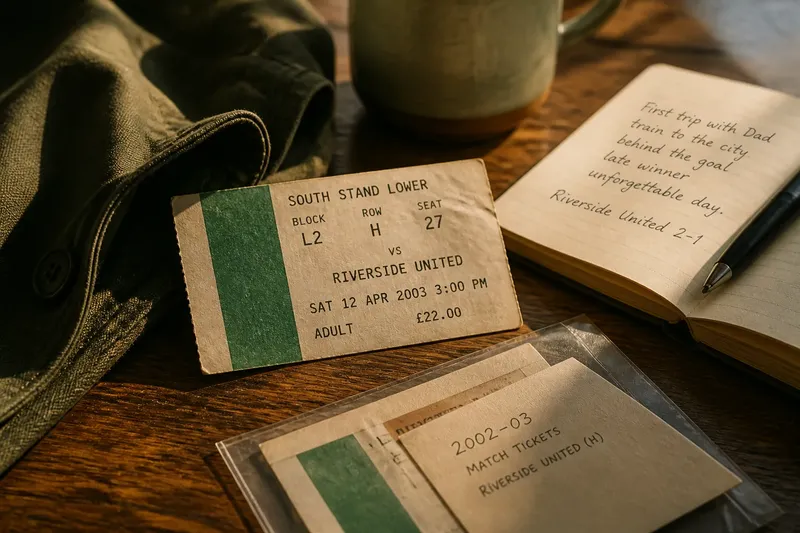
A First Visit to a Sporting Hall of Fame
A first visit to a sporting hall of fame feels more memorable when you choose one theme, compare objects with captions, and leave with a question.
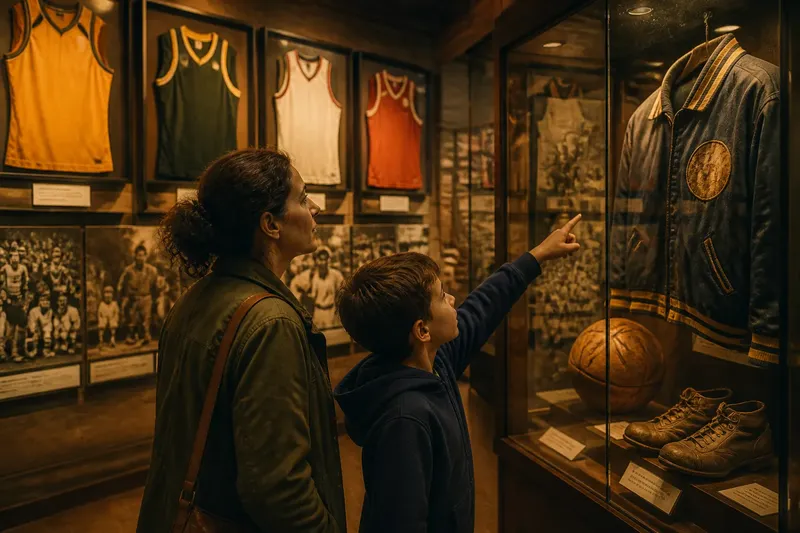
At the entrance to a sporting hall of fame, a visitor pauses beneath a row of framed jerseys, while a child nearby points toward a glass case of old equipment. A first visit to a sporting hall of fame can quickly become a race from display to display. A better occasion has a modest aim: choose one theme, notice how objects and captions shape its story, and leave with a question still in mind.
A visit with a thread
Imagine Lena, who has come to a regional hall of fame on a rainy afternoon with her nephew, Milo. He follows a local basketball team; she knows little about its history. They have enough time for a considered visit, but not the appetite to read every panel or inspect every case.
At the lobby map, Lena suggests a theme they can both recognize: how a team’s identity is carried across generations. It is broad enough to connect uniforms, photographs, trophies, and personal accounts, yet focused enough to help them decide what to linger over. They agree to look for evidence of continuity and change, not to collect names.
This is an occasion-based plan rather than a route through every room. The occasion might be a family outing, a solo visit before a game, or a return to a place connected with a former player. Its purpose shapes what deserves attention. A first-time visitor with a child may prioritize objects that invite conversation; someone revisiting an old club may search for one familiar emblem.
Choosing one theme
A useful theme is a question-sized idea, not a subject so large that it swallows the building. “The history of basketball” is likely to lead everywhere. “How did this team become recognizable to its supporters?” gives the visitor a more workable lens.
Try phrasing the theme as a prompt:
- What changed in the way athletes represented their city or club?
- Which objects show how supporters took part in a team’s story?
- How did a sport’s equipment alter what players could do?
- What parts of a team’s identity stayed visible through a change in its name or colors?
The prompt does not have to produce a single answer. It simply gives the group a reason to compare one display with another. If a case seems interesting but unrelated, the visitor can enjoy it briefly without feeling obliged to follow every detail.
Lena and Milo choose the question about recognition. At the first display, they see a jersey with a familiar color scheme beside a photograph of players wearing a different version. The object provides a material detail; the photograph places it on bodies, in a setting, among teammates. Their theme invites them to ask what remained recognizable and what did not.
Objects beside captions
A museum object is not a complete story by itself. A scuffed ball might suggest heavy use, but it cannot say who handled it, why it mattered, or how it came to be preserved. Captions supply context, often including a name, date, event, donor, or explanation of the object’s role.
Reading the object and its caption together means looking for the relationship between them. Does the label explain a visible feature, such as a repaired seam or changed crest? Does it connect the object to a larger event? Does the display ask viewers to admire an achievement, understand a rule, or remember a community?
Captions also frame attention. A trophy may be described through a championship result, while the nearby image makes visible the people who presented it or stood around it. Neither view necessarily cancels the other. The pairing can show how an achievement was made public and remembered.
At one case, Milo notices a faded patch on a warm-up jacket. The caption identifies the team and describes the garment’s connection to a season of travel, but says little about the patch. He wonders if it marked a local sponsor, a tournament, or something else. Lena points out that the question comes from comparing what the label tells them with what the object leaves open.
Reading the display
Displays create meaning through arrangement as well as text. A sequence of photographs may suggest a progression; placing a supporter’s scarf beside a player’s medal may connect public devotion with private accomplishment. Even a gap between objects can invite a visitor to infer a change or contrast.
For their theme, Lena and Milo look for three kinds of evidence: what is shown, what the caption says, and what the arrangement encourages them to connect. They do not treat an inference as a fact. If two objects sit together, for example, that placement may be a curatorial choice rather than evidence that they were used at the same moment.
This habit makes room for uncertainty without draining the visit of pleasure. A photograph can stir recognition before a visitor knows the names in it. A piece of equipment can make an unfamiliar period feel tangible. The visitor can enjoy that response and still ask what further context would change the interpretation.
For a first visit to a sporting hall of fame, it is not worth the effort to copy every caption or photograph every display. That turns looking into a collection task and can pull attention away from the details that made the visit meaningful. A brief note about one object and one unresolved question is often enough to carry the experience beyond the building.
Where should you pause?
What if a display falls outside your theme?
Give it a quick look, then decide whether it adds a useful contrast or simply opens a different subject. If it does not help answer your chosen prompt, move on without treating that choice as a missed obligation.
Should you read every caption?
Read the labels attached to the objects you have chosen to compare, then scan nearby text for context that could change their meaning. Long panels can wait unless their subject directly helps you understand the theme.
What makes a good final question?
A good question points to a specific uncertainty: who used an object, why a symbol changed, or whose perspective is absent from a display. It should arise from something you actually noticed, not from a need to produce a grand lesson.
How can a group share the visit?
Invite each person to choose one object and explain what drew their attention before comparing interpretations. A child may focus on a distinctive shape, while an adult notices the caption’s account of a club or community.
A question to carry
Near the end of their visit, Lena and Milo return to the jacket with the faded patch. They have not solved its meaning, but they can now describe the evidence: the patch is visible, the caption gives the garment’s broader context, and the display leaves its purpose unexplained. Their question becomes more precise: did the patch represent a local connection that mattered to the team’s identity?
They leave with a note on Lena’s phone: “What did the patch stand for, and who would know?” It is not a verdict about the exhibit. It is a reason to ask a relative who followed the team, look for another related object on a later visit, or simply remember that the display held something they could not settle at a glance.
That is a useful result for a first visit: not full coverage, but a sharper way of seeing. Choose one theme, compare the physical evidence with the words beside it, and let a remaining question mark the edge of what you know. A sporting hall of fame can then feel less like a storehouse to finish and more like a conversation whose next turn belongs to the visitor.